Patterns of Belonging: The fashion journey of Shaheen Hafeez

Preserving cultural heritage and identity through clothing

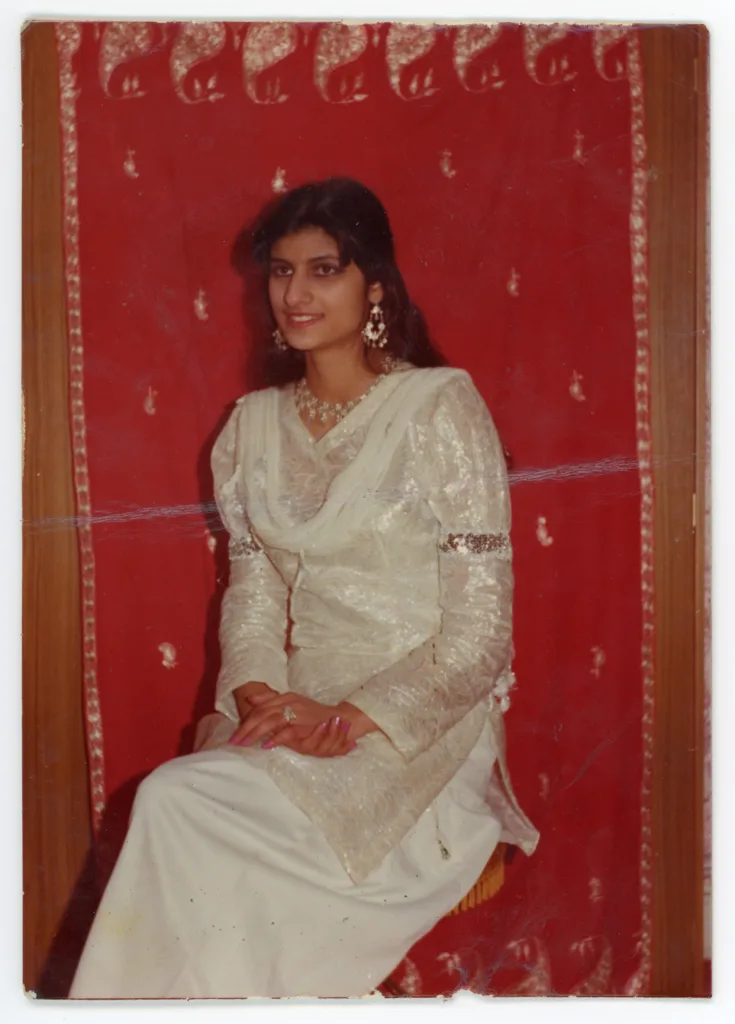
Fashion plays a vital role in preserving and expressing South Asian cultural heritage among diaspora communities. Through clothing, people maintain a connection to their roots, celebrate cultural identity, and pass on traditions to future generations in multicultural societies. The rustle of silk or the shimmer of a dupatta becomes more than mere fabric – it becomes remembrance, a language of memory and pride. When families gather for religious occasions or a wedding, dressing in traditional attire transforms the occasion into something significant. It reminds them, and those around them, that their culture continues to thrive despite distance and time.

For Shaheen Hafeez, her traditional wear is a living piece of history, carrying within it the colours, textures, and traditions of generations past. Shaheen’s family moved to Bradford when she was a young girl. Growing up in Bradford meant integrating and learning new customs, in addition to those her family had practised in Pakistan.


Shaheen Hafeez on developing identity through fashion
Read the transcript

Shaheen’s school experience included being taken out of class to learn English with just two other Asian children. Her mum handcrafted her a beautiful green-and-gold dress with pyjama trousers underneath for her first Maypole dance, while other students wore shorts and tops. During this time, she became aware of how her culture stood out. Shaheen recognised the differences between her culture and Western life, but she never let them hold her back. Although she felt different, she was thankful that she was never bullied for it growing up. Instead, she embraced both her Pakistani heritage and Western culture, expressing them through fashion.
 

“I felt as though my culture stood out… it was like I was different.”

Shaheen Hafeez on her Mayday outfit and dressing differently at school
Read the transcript

Coming from a family of talented seamstresses, it was only natural that Shaheen would develop this skill too. Her mum and sisters loved knitting and making their own clothes, and her childhood family home even had a fabric shop in the living room where her mum sold the clothes she had made. Even though she grew up feeling like an outsider, Shaheen recalls that they did their best to fit in and integrate when they moved to Bradford. Not wanting to be left out, Shaheen solidified her identity as a British-Pakistani citizen through her clothing.

Hafeez20250424_0002
Referenced Archive Item: Parveen, Arif and Shaheen Hafeez, Southfield Square, 1972. View

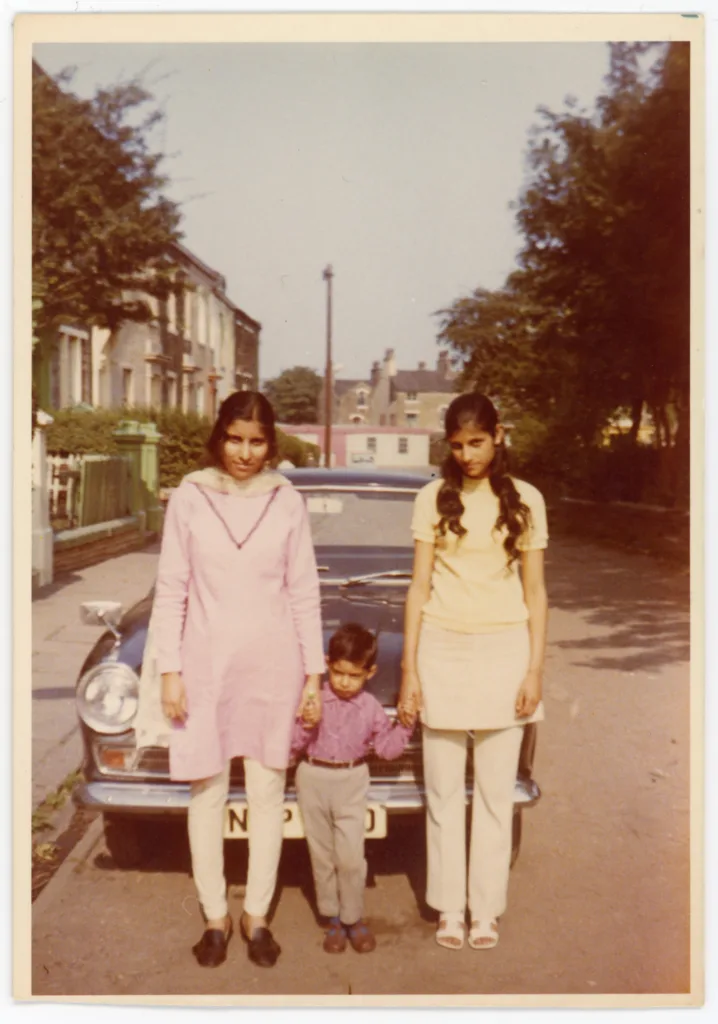
It was at school that Shaheen learnt how to make clothes. Learning to sew from patterns, she made the yellow skirt shown in this image, where she stands in front of the family car with her sister Parveen and brother Arif. Shaheen’s parents allowed her and her siblings to wear whatever they wished as long as it remained modest, giving Shaheen the freedom to explore her clothing choices further. We see Shaheen wearing a short-sleeved light yellow top, paired with cream trousers, beneath the skirt she made at school. Showcasing early 70s fashion trends, the blend of traditional South Asian and Western influences began to shape Shaheen’s fashion style going forward.

Hafeez20250424_0003
Referenced Archive Item: Shaheen Hafeez, Southfield Square, 1972. View

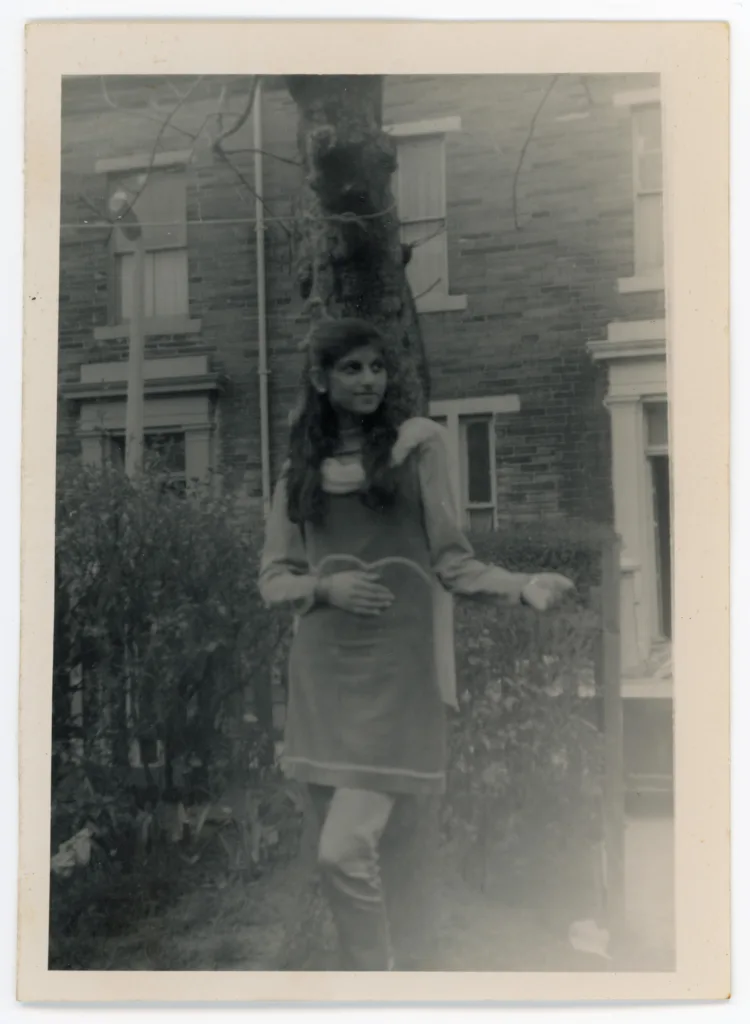
In this black-and-white photo, Shaheen is standing outside her house on Southfield Square, wearing a knee-length, tunic-style dress she made herself, with a simple, straight cut, a decorative border along the hem, and a curved design across the front. Underneath the tunic, she wears a long-sleeved top, giving the outfit a layered look, a common feature of modest yet fashionable attire of the period, and churidar-style (slim-fitted) trousers, adding a distinctly mod 1970s British touch. Completing the look, Shaheen has a dupatta (scarf) loosely draped over her shoulders.

Her inspiration came from actresses she would watch at the cinema with her brothers. Shaheen and her brother, an avid photographer, would work together, combining Shaheen’s fashion style and her brother’s photographic eye to create portraits which captured a graceful mix of South Asian and Western fashion of the 70s in an elegant and youthful way.


“I remember mum having a knitting machine where she’d sit and make clothes for us growing up.”
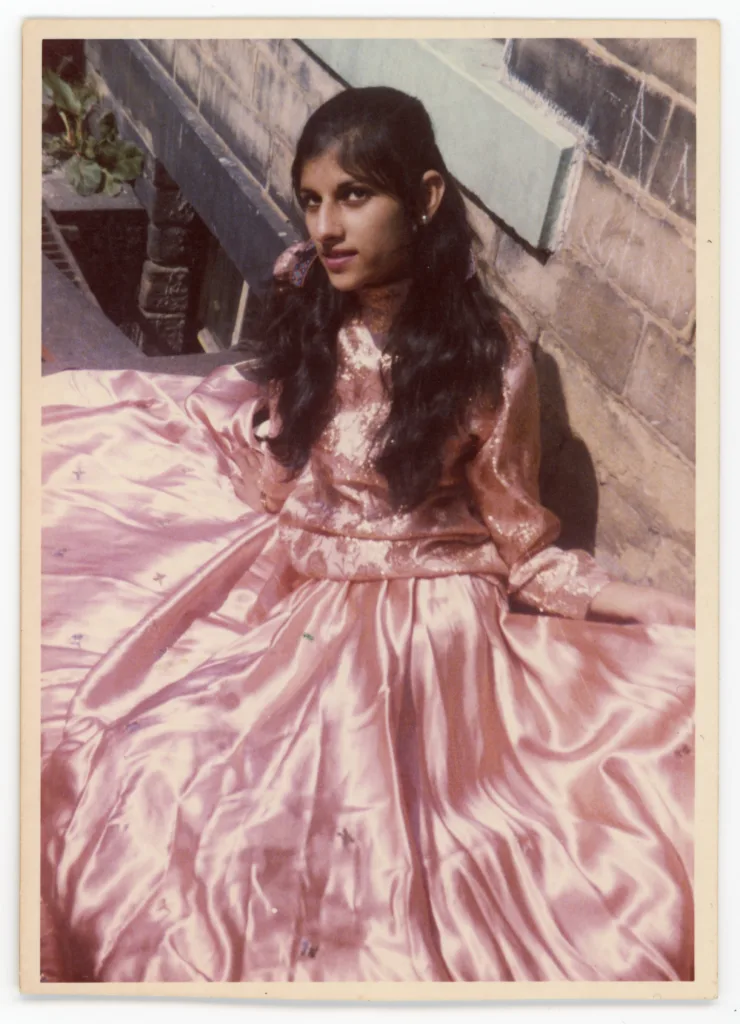
Hafeez20250424_0004
Referenced Archive Item: Shaheen Hafeez, Southfield Square, 1973. View

This picture was taken on Eid outside the family home on Southfield Square when Shaheen was 15, in a floor-length, hand-sewn pink satin gown that her mother had made for Eid. It reflects both elegance and care, combining traditional celebration attire with homemade craftsmanship. The combination of the shimmering fabric, the handcrafted design, and the loving effort behind it makes the outfit deeply personal – a reflection of Eid’s joyful spirit and the mother-daughter bond that inspired it.

Shaheen mentioned that dressing up was also a significant influence, inspiring her to blend her heritage with Western fashion. It wasn’t until she reached sixth form that she began exploring sewing from patterns, which later shaped her fashion sense, and she recalls it as an essential skill for her to learn. For Shaheen, dressing up and mixing her South Asian heritage with Western fashion was a way to find her personal style and identity. Clothing and fashion were essential in helping Shaheen connect to and maintain her cultural roots.

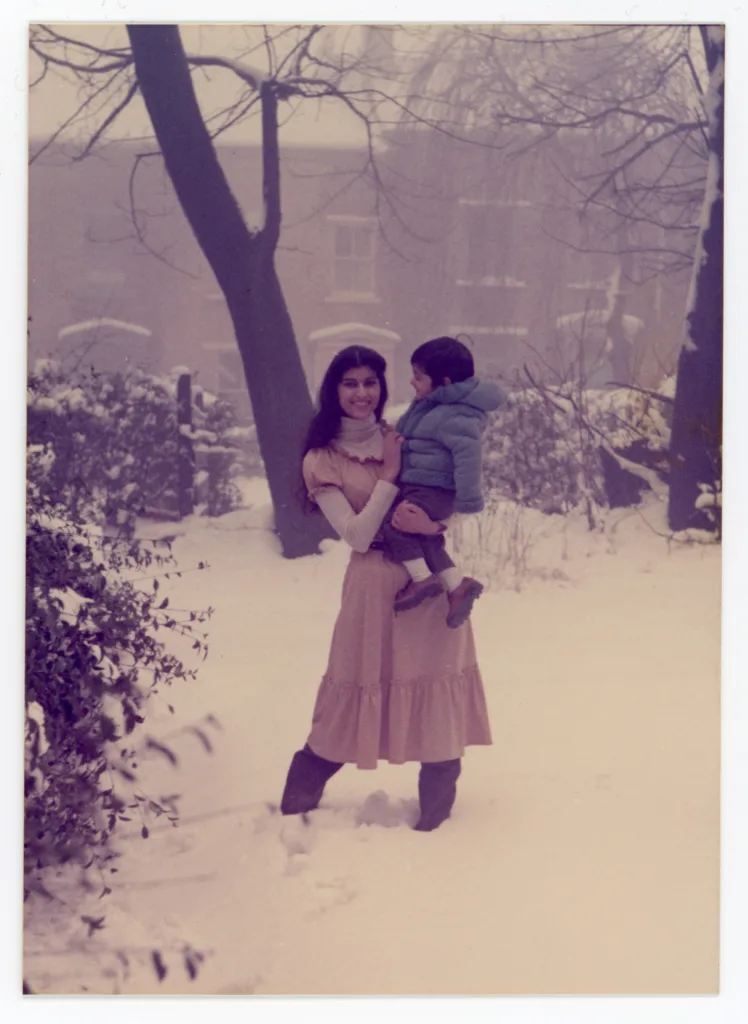
Hafeez20250424_0006
Referenced Archive Item: Shaheen Hafeez and Rizwan Mir, Southfield Square, 1979. View

Whilst talking about contemporary fashion trends and online shopping, Shaheen recalls how she would look through clothing catalogues and pick outfits. The dress in this picture was from a catalogue and features a modest, feminine silhouette with short, puffed sleeves, a fitted waist, and a tiered skirt that falls just below the knee. Underneath the dress, she is wearing a cream turtleneck, adding warmth and contrast, a practical layering choice for the snowy weather. Completed with a pair of dark trousers. Shaheen reminisces about how this was her first time experiencing snow and rushed outside in this outfit (which didn’t keep her very warm!) with her nephew Rizwan to take this picture.

Growing up, Shaheen’s experiences wearing Western attire sometimes made her feel that people looked down on her for it. Traditional clothes labelled you as Pakistani or Indian; you knew who your people were. But Shaheen felt there was no harm in mixing cultures. When trousers entered western fashion, she says there wasn’t much difference between a shalwar and trousers; to Shaheen, they were both the same.

Hafeez20250424_0010
Referenced Archive Item: Shaheen Hafeez, Southfield Square, 1979. View

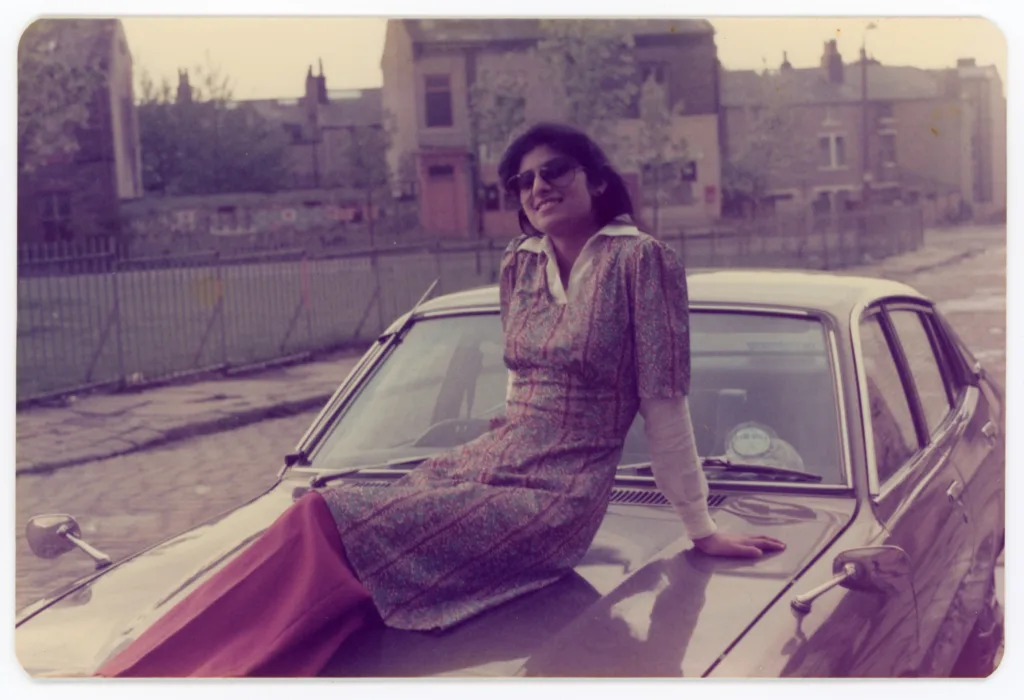
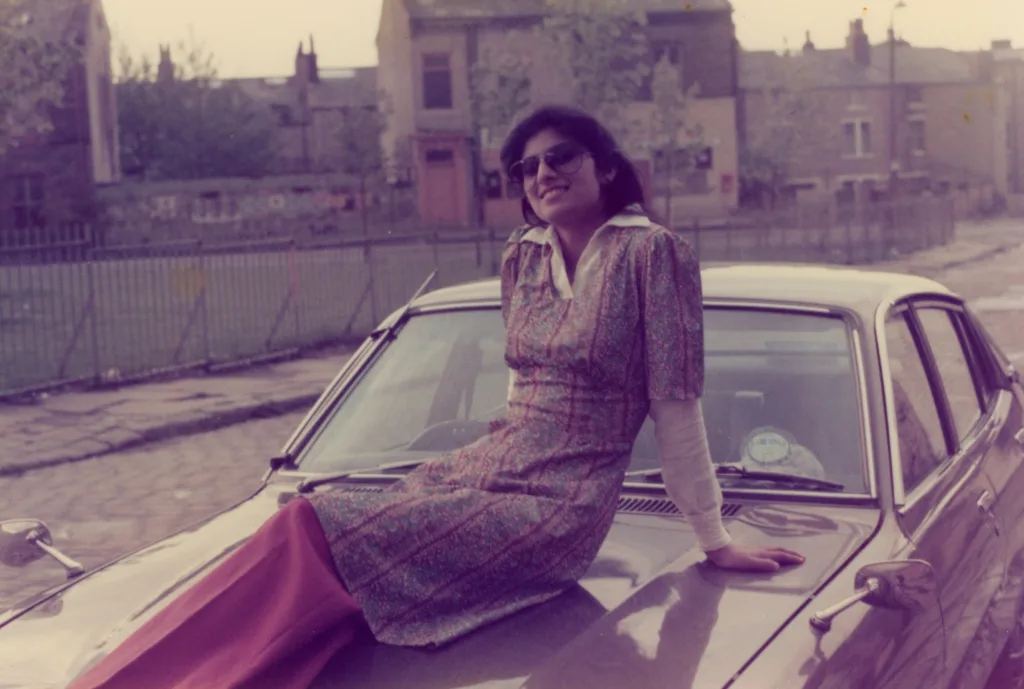
Sitting on the hood of her brother’s car, Shaheen wears a self-sewn dress with a muted, patterned motif. The tunic’s short, puffed sleeves and fitted waist highlight her attention to detail. Beneath, a light-coloured long-sleeve blouse provides layering, with bold reddish-pink wide-legged trousers, accessorised with large, dark sunglasses. This combination reflects a thoughtful balance between modesty and style, seamlessly intertwining her South Asian roots with Western fashion sensibilities.

Shaheen’s evolving style throughout her youth shows an integration of her cultural heritage into Bradford’s fashion scene at the time. By pairing dresses with shirts and trousers, she crafted a unique aesthetic for herself that blends tradition with personal expression, emphasising the richness of cultural dialogue through fashion.

“I suppose it was one way of saying that we want to mix in with these people.”

For Shaheen, fashion serves as a powerful bridge between heritage and adaptation, allowing her to honour cultural roots while embracing new identities. Every stitch tells a story of resilience, of how beauty can travel oceans and still carry the soul of home. Wearing hand-sewn salwar kameezes made by her mother for Eid or combining kameezes with Western silhouettes reflects more than just an aesthetic choice; it embodies a dialogue between cultures, where memory and modernity coexist. In this balance, fashion becomes a quiet yet profound act of continuity, a way to stay connected to one’s heritage while confidently navigating and shaping a new cultural landscape.

In the end, fashion becomes a story of continuity and memory made visible. It connects the past to the present, the homeland to the diaspora, and tradition to innovation. Through fabric, colour, and design, South Asians in the West are not only preserving their heritage, they are wearing it with pride, ensuring that each stitch keeps their culture alive for future generations. It is culture worn close to the skin, a tapestry of pride and persistence.

This text was written by Bradford Young Curator Zarah Ashraf. She met Shaheen Hafeez at the Khidmat Centre, a community centre in BD7 which provides health and wellbeing facilities for the elderly, people with learning disabilities, women and young people.

Share
Privacy Overview

This website uses cookies so that we can provide you with the best user experience possible. Cookie information is stored in your browser and performs functions such as recognising you when you return to our website and helping our team to understand which sections of the website you find most interesting and useful.